Wednesday, December 20, 2017

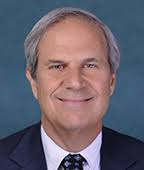
Brian Stoffers: A Giant of the Commercial Real Estate Industry - a friend who has made a difference!

Brian's bio from the CBRE website:

CBRE-Global President, Debt & Structured Finance

Brian oversees the global Debt & Structured Finance practice at CBRE. Under his leadership, approximately 160 professionals have originated nearly $150 billion in loan volume since 2014.  Additionally, this practice maintains a loan services portfolio of more than $160 billion globally.  

Brian has extensive experience in the origination, structuring, placement, closing and servicing of commercial real estate debt for life insurance companies, pension funds, banks, debt funds, Freddie Mac, Fannie Mae, FHA and Wall Street sources.

Prior to the CB Richard Ellis acquisition of L.J. Melody in 1996, Brian was Senior Vice President and Southwest Regional Manager for CB Commercial’s mortgage banking division.  Brian began his career with Coldwell Banker Commercial in 1981 and became a senior real estate finance officer in the firm’s La Jolla, California office.

On our phone interview, Brian and I were trying to remember when we met.  We concluded that it was many years ago and may have been via this column.  Then, as has happened a number of times with folks that I’ve ‘met’ through “On the Road”, we got together.  Over the years, Brian has written to me when something I write resonates with him.  It’s great to see someone with the integrity and professionalism that Brian possesses rise in the industry to a very senior position.  While he used to be amazed at my travel schedule, the shoe is now on the other foot as Brian has travelled lots of miles in his global role. 

Q.  How did you get your start in commercial real estate?

A.  Let’s call it serendipity.  I started in the business in 1980.  I went to work for a small tenant rep broker – when I say small it was a one-man band in Orange County in So. California.  The guy found me at a lunch & learn at Cal State Fullerton.  I was pretty much working my way through college as a grocery clerk. He did a presentation and said, “Hey, I need some help but I can’t pay you anything” – that was my entre into the business.  Working for nothing for 6 months was table scratch but it turned out okay.

Anyway, I ended up with a buddy drinking beer with our dates at an international street festival in the City of Orange where I was born and raised.  My date that day my turned out to become my wife and we’ve now been married over 33 years.  My buddy and I decided that it was far better for us to drink beer that was brewed in Europe rather than Orange County so two weeks later we were off to Europe to drink beer for 10 weeks.  It was a soul-searching time for me and it was during that trip that I realized I loved the commercial real estate business but I wasn’t getting near the training or exposure that I needed.

When I came back, I embarked on a job search and it turned out that my mother, who was a secretary at a local high school, worked with another secretary, who happened to be a swimming teacher who taught me how to swim when I was five.  Her son was the managing director of what was then Coldwell Banker Commercial in Denver.  He hooked me up with Personnel Director Tom Townley in Los Angeles. (they used to call it Personnel back in the day, now they call it HR).   After a battery of 8-hours of tests, mostly psychological tests with questions like, “Would I rather pick flowers or saw wood” kind of thing, I had 6 interviews with Executive Vice Presidents at the company.  None of the EVP’s ever returned a phone call – that was part of the tenacity testing I was unaware of at the time. I got hired into a yearlong training program and become a “Wheelie”.  I was one of 11 invited into the program. My fellow Wheelies were all male, they were all white – that was the day.   I was one of just a few that were not ‘Trustafarians’ – most had ample trust funds supporting their $1,000 / month salaries.

We rotated assignments in different departments every three months.  My second assignment was in the corporate marketing department in downtown Los Angeles.  Funny story: I met a guy who was also in the program and we agreed to have lunch together. We got in his new Beemer, which was parked next to my un-air conditioned Honda sedan and went someplace for lunch.  He asked me where I lived and I said, “On my Mon’s sofa in Orange County.” I asked him where he lived and he had just purchased a home in Bel-Air. He was obviously a Trustafarian. 

That training program was terrific.  The last 3 months my assignment was in the mortgage banking group in San Diego and that’s where I really found my passion and my niche. It required a combination of marketing and analytics - number crunching (I had been an accounting major at Cal State Fullerton).  They decided to hire me after that 3-month stint in San Diego and that was my real entre into the CRE business and the rest is history – 36 years later I'm still with CBRE.  

Q.  What advice would you offer someone who has been in the commercial real estate industry a short time or a student looking for his or her start?

A.  I would put a number of ingredients into that bucket. Tenacity – don’t give up. Be persistent but polite.  Work hard at it. Be yourself – don’t be somebody who you’re not and follow your passion. 

Q.  Looking back on your career is there anything you wish you had done differently and, if so, what? 

A. I don’t have many regrets.  I had many forks in the road and in retrospect, having followed any one of those forks would have taken me in a direction that may not have ultimately turned out as well as the path I chose.  That’s part of happiness in life - not having regrets, not looking back and not trying to turn back the clock.  We can’t turn back the clock, we must move forward.  I had a blood disease that nearly derailed me for good – I could have been dead at 29 - and those experiences made me a better person long-term.  I believe that life changing events can be a blessing. 

Q.  Who have been the greatest influences in your career and why?

A.  Wow.  Well if I start – there’s been a whole series of influencers over the years both internally, within the company and externally.  My grandfather was a great influence – a hard-working German who would handle a plow behind a horse or a tractor.  I learned a lot from him – I learned how to drink beer from him at age 10.  One at a time.  My grandfather was a self-made man, never graduated beyond 8th grade.  A hard-worker, honest as the day is long.  He was genuine and never had an enemy.  That taught me a lot.  I never heard him raise his voice. He personified a hard-working, ethical human being.  He was never a wealthy man but wealth did not measure his being.  He had people driving from LA to North San Diego County to buy his produce because they knew it was organic, unusual in the day, and he irrigated with water that never left his property.  They also raised beautiful fuchsias and other flowers.  He had a green thumb like nobody’s business and so did my grandmother. He had the best compost piles and he was an inventor.

One day I noticed this contraption that my grandmother had on the patio. I said, ‘Nana, what is that plastic bag hanging out of your ceiling?” “Oh, Grandpa made me a solar hair dryer.” He was just that kind of guy, always inventing – sort of a Rube Goldberg kind of guy.  Hard-working and solid.  He tragically died of prostate cancer that metastasized into bone cancer. He was a hearty, 5’10” and he died at 100 pounds of skin and bones.  But his mind was there until the very end…the very, very end.  I smile when I think about him. 

In my real estate career, there have been a number of individuals who have meant a lot to me. Chris Ludeman has many characteristics that I respect greatly. Mike Lafitte has been a wonderful role model, personally and professionally.  Bob Sulentic leads by example and is a tireless and passionate CEO. Larry Melody, whose company we acquired in 1996, was a great influence.  Larry was iconic in the business, he taught me a lot.  

I believe a successful human being is a compilation of not one but many characteristics found in those whose paths I’ve witnessed.  I’ve taken bits and pieces of elements lacking in my persona and have tried to learn from what I see in others.


Brian Stoffers


Friday, December 15, 2017

Jeff Fisher, Ph.D.: A Giant in the Commercial Real Estate Industry – a friend who has made a difference!

Jeff’s bio from University of Indiana, Kelley School of Business website:  

Jeffrey D. Fisher, Ph.D. is a founding Partner in the Pavonis Group, LLC and Director of Research and board member with RealNex.  He is also President of the Homer Hoyt Institute, a Professor Emeritus of Real Estate at the Indiana University Kelley School of Business, Visiting Professor at Johns Hopkins University and a Research and Educational Consultant to the National Council of Real Estate Investment Fiduciaries (NCREIF), and serves on the advisory board of Sterling Valuation. 
Dr. Fisher has served on the board of directors of the Pension Real Estate Association, the National Council of Real Estate Investment Fiduciaries (NCREIF) and the Real Estate Research Institute (RERI).  He received PREA/Graaskamp Award for Research Excellence from the Pension Real Estate Association, the David Ricardo award, Richard Ratcliff award and the Pioneer Award from the American Real Estate Society, the George Bloom Award from the American Real Estate and Urban Economics Association and the Martin S. Katz Memorial Award from the American Property Tax Council (APTC).
He was a founding trustee of The Appraisal Foundation that was formed by the major appraisal organizations as a self-regulatory organization and source of standards for the appraisal industry. He served as President of the American Real Estate and Urban Economics Association (AREUEA) in 1990 and the 1986-87 Chairman of the Real Estate Center Directors and Chairholders’ Association. He has worked with many professional organizations to develop and teach courses and seminars including NCREIF, PREA, the Appraisal Institute, the CCIM Institute, NACORE and others.
Professor Fisher has a doctorate in Real Estate from Ohio State University.  He is a coauthor of Real Estate, 9th edition published by John Wiley and Sons, coauthor of Real Estate Finance and Investments, 15th edition, published by McGraw-Hill, and coauthor of Income Property Valuation published by Dearborn.  His books have been translated into Japanese, Korean and Chinese.   He has served as an expert witness in court cases for several clients including Inland Steel, Simon Property Group and the Internal Revenue Service (IRS).  He has consulted for the Federal Reserve System in Washington, D.C. and the multifamily group of the Federal National Mortgage Association (Fannie Mae).   He has appeared on CNBC to discuss real estate investment and is frequently quoted by the media including the Wall Street Journal.
Dr. Fisher has also published numerous articles in journals such as The Real Estate Economics, Journal of Real Estate Finance and Economics, The Journal of Urban Economics, The Journal of Real Estate Research, Journal of Portfolio Management, National Tax Journal, Public Finance Quarterly, The Appraisal Journal, Real Estate Review, The Real Estate Appraiser and Analyst, Real Estate Issues, The New Corporate Finance and the Journal of Property Tax Management.
Steve's note: Jeff and I originally met when we both served on a panel at a meeting of PREA and after that we both attended meetings at NCREIF and the Homer Hoyt Institute.  His passion for the real estate business, quick mind and great sense of humor are magnetic.  He is also a really nice guy who has mentored a number of students.  He is seemingly tireless and he, along with colleagues mentioned below, has had a seriously positive and significant impact on the commercial real estate industry. 

Q.  How did you get your start in the commercial real estate industry?

A.  When I was a graduate assistant at Wright State University, I had a professor named Dr. Ed Hemmer. He had also developed a regional mall and apartments in his hometown (Seymore, Indiana).  As part of his doctoral dissertation, Ed developed what may have been (mid-1970s) the first computer program to do a Discounted Cash Flow (DCF) analysis.  The program projected cash flows from the acquisition of the land through development and construction financing and then through the operating years including the permanent financing until sale. My task was to get the program working on the computer at Wright State.  

As part of that process, I flowcharted the program to understand how it worked. I then extended the program to do a Monte Carlo simulation and published my first article illustrating the use of Monte Carlos simulation in real estate valuation in The Appraisal Journal. 

During that same period of time, Ed's mall lost an anchor tenant to bankruptcy (W.T. Grant’s). Almost every day I got updates about what was going on with the negotiations with a replacement anchor, J.C. Penney, and was learning about commercial real estate at the same time.

By this time, I was not only interested in commercial real estate but also continuing to do research and pursue an academic career.  I started the doctoral program at Ohio State University and began to work with a real estate professor there (William 'Bill' Brueggeman) who had a grant from HUD (U.S. Department of Housing and Urban Development) to analyze the impact of tax law changes on the rents for multifamily investments.  Bill was very interested when he learned I had developed a computer program to solve for the rents, which would provide a typical investor with the same after-tax return.  Up until that point, he had been doing this manually!

When I became an Assistant Professor at Indiana University, I teamed up with another professor, Jerry Stern, and we created what was the first DCF program for personal computers.  This became a lucrative commercial venture that also led to consulting opportunities and set the stage for me always trying to balance being an academic and pursuing consulting and business ventures related to commercial real estate.  And Bill Brueggeman and I have worked together for the past 35 years on our Real Estate Finance and Investments textbook!

Q. What advice would you give to people early in their commercial real estate career or students looking to get their start?

A. Figure out what career best matches your personality.  Are you more people and marketing oriented? Then being a commercial broker or in the marketing department of a firm such as an investment manager may be a best fit.  Are you more analytical? If so, consider being a researcher or appraiser.

Most careers in commercial real estate require a combination of analytics, marketing, people skills, etc.  It is a matter of degree and where you have a comparative advantage and will be most happy with your job.  Realize that you must “pay your dues” early in your career.  We all must – even in academics!  And you will need to keep learning new things throughout your career.  Finally, realize that not everyone will like you or agree with you no matter what you do – unless you never do anything!  Don’t take it personally. 

Q.  As you look back on your career, is there anything you wish you had done differently in your career? If so, what?

A.  I sometimes wonder what it might have been like to follow other career paths that might have been feasible for me.  For example, what if I had left the academic world completely and concentrated on software development? I was an early adopter of the Internet and making data available online. Perhaps I could have been successful in the software business full time or another venture related to the Internet.  Then I realize that if I had, I wouldn’t have been able to accomplish what I have as a professor of real estate, which seems to have impacted a lot of my students.

Q. Who has most influenced your career and how?

A.  Several people influenced the direction of my career.  The first was Edgar Hemmer, who, in addition to being a professor was also a real estate developer. He was the first to get me interested in real estate with emphasis on commercial real estate.  While working with him I realized that I could apply my understanding of computer programming and finance to commercial real estate. 

The second would be William Brueggeman who was a professor at Ohio State University when I started the doctoral program there.  He made me realize that I could contribute to real estate research and be successful getting articles into journals.  He and I worked together on several projects including eventually becoming a co-author with him on our Real Estate Finance and Investments textbook.

Third would be Blake Eagle who was the founder of the National Council of Real Estate Investment Fiduciaries (NCREIF).  Blake instilled in me the role that real estate professional organizations like NCREIF should play in being objective and providing research driven information, without being an advocate. He is a role model for how to “win friends and influence people.”  I have spent over 35 years working with Blake and NCREIF so this clearly impacted my career.

Finally, Mark Kingston who was the former CEO of ARGUS Software and currently a partner in the Pavonis Group. Mark was the first to get me to view real estate, and business in general, from more of a global perspective rather than being US centric.  Although my textbooks were used in other countries, I had not done any international travel before starting to work with Mark as a consultant with ARGUS.  We traveled throughout Asia together doing presentations and meeting people at universities and real estate professional organizations. Mark has one of the strongest work ethics of anyone I have ever known and approaches business with the attitude that nothing is impossible. I got to witness him orchestrating several acquisitions and then ultimately the sale of ARGUS to Altus. 

Jeff Fisher, Ph.D


Wednesday, December 13, 2017

Lee Neibart: A Giant in the Commercial Real Estate Industry - A friend of mine who has made a difference!

Lee Neibart

Lee is a Partner in the Ares Real Estate Group and Chairman of Global Real Estate, focused on fundraising and U.S. opportunistic investing. He serves on the Ares Real Estate Group’s U.S. Development and Redevelopment Fund II Investment Committee. He is a Director on various boards relating to Ares' investment portfolio.

Lee joined Ares Management LLC in July 2013 from AREA Property Partners, where he was a Global CEO from 1993 to 2013. From 1979 to 1993, Lee was with the Robert Martin Company, a real estate development and management firm, most recently serving as Executive Vice President and Chief Operating Officer. He also serves on the Advisory Board of The Real Estate Institute of New York University. Lee is a past President of the New York Chapter of the National Association of Industrial and Office Parks. He graduated from the University of Wisconsin with a B.A. and holds a M.B.A. from New York University.

To the best of my recollection, Lee and I met in the early 1980’s when I was working for a fellow that Lee knew doing workouts of troubled real estate workouts for banks and insurance companies who had foreclosed on loans.  Through the ensuing years, Lee and I would meet every so often, to talk about the industry, our families and our lives.  Lee has always been someone willing to spend time with me when I was either thinking of doing something different in my career or had already started something new.  He’s been a trusted friend.  In 2012, when I started the presentation coaching consulting business, that has grown into Felix / Weiner Consulting Group, Lee’s firm was one of my early clients.

In 2006, I recorded my first album of original music called, “Felix…Finally.”  The project was done as a fund-raiser for Keys for Kids, an organization that donated used band instruments to under-funded public schools across.  Lee and his wife donated a meaningful amount to that project and, thanks to folks like them, the net amount to Keys for Kids was $50,000. I will never forget their generosity and support.  Lee is a class act, straight shooter and a real, real estate pro that has made a difference in the industry and in the lives of many folks in the commercial real estate world.  

One anecdote:  Many of us tell young people especially how truly small the global commercial real estate industry is.  It’s not ‘Six Degrees of Separation” – it’s more like 2!  Some time back, I’m having breakfast in a hotel restaurant somewhere in Germany.  Who is sitting two tables over from me?  Lee and his colleague, Bill Benjamin.  Lee comes over and says, “How funny to run into you here.  Then again, it just shows how global commercial real estate has become especially for those of us to travel a lot.”


Q. How did you get your start in the commercial real estate industry?

A. I had no idea what I wanted to do.  My brother in law was a mortgage broker and he suggested the commercial real estate might be an interesting area for me to explore.  I had interviewed with accounting firms directly out of business school and quickly realized I had no interest in being an accountant.  I was sitting in my apartment and saw and ad in the New York Times about Prudential Insurance Company looking for an analyst for their real estate department  - which was just being created. I answered the ad and got the job. I was the lowest man on the totem pole and I started working in commercial real estate.

Q.  What advice would you give younger people in the commercial real estate industry or graduate students looking to begin their commercial real estate industry careers?

A.  My advice is don’t seek out the high-flying, glorified jobs.  Don’t look to go to work for a private equity firm immediately or even with a developer right off the bat.  You have to have a skill that people want. If getting that skill means becoming an analyst at a pension fund or insurance company or working at a brokerage firm learning how to lease space that’s the place to start.  You must get as close to the bricks and sticks as you can in order to learn, in the field on the ground, what real estate is all about.  Don’t take a job where you’re sitting behind a computer running numbers all day when you have no idea as to what those numbers mean.  There has to be a relationship between numbers and real estate and you can’t understand that unless you’re learning out in the field.


Q.  When you look back on your career is there anything you wish you had done differently?

A.  I’m a very, very lucky guy.  I’ve gotten to travel the world and see many things.  I’ve learned my business in an orderly, gradual basis and quite truthfully I don’t have any regrets. 

Q.  Who has most influenced your career and how?

A.  I’d like to answer the question this way:  “Who gave me the greatest opportunity in my career?”  One was Marty Berger, who was the Martin of Robert Martin.  We were a significant development company in Westchester County, New York in the 80’s and 90’s.  The second was Bill Mack who created Apollo Real Estate and I was fortunate enough to be an early member of that team back in 1993 when the Private Equity world was starting.  Those two gave me the opportunity to learn the business.  and influenced my career the most. 


Lee Neibart

-->

Blog Archive